
Forum No.11
3rd Dec 2016
Forum No.11
3rd Dec 2016
Forum No.11
3rd Dec 2016
Forum No.11
3rd Dec 2016
Forum No.11
3rd Dec 2016
COLLABORATION | IS “MEME” ORABLE LEADERSHIP
COLLABORATION | IS “MEME” ORABLE LEADERSHIP
COLLABORATION | IS “MEME” ORABLE LEADERSHIP
COLLABORATION | IS “MEME” ORABLE LEADERSHIP
COLLABORATION | IS “MEME” ORABLE LEADERSHIP

FOUNDER & DIRECTOR • INCUBIS
Amit Krishn Gulati
ARTIST
Rohit Sharma
ARTIST
Sudip Roy
FOUNDER & DIRECTOR • INCUBIS
Amit Krishn Gulati
ARTIST
Rohit Sharma
ARTIST
Sudip Roy
FOUNDER & DIRECTOR • INCUBIS
Amit Krishn Gulati
ARTIST
Rohit Sharma
ARTIST
Sudip Roy
FOUNDER & DIRECTOR • INCUBIS
Amit Krishn Gulati
ARTIST
Rohit Sharma
ARTIST
Sudip Roy
FOUNDER & DIRECTOR • INCUBIS
Amit Krishn Gulati
ARTIST
Rohit Sharma
ARTIST
Sudip Roy
ASSOCIATE PROFESSOR • JNU
Dr. Kaushik Bhaumik
FOUNDER • POTLI
Pooja Ratnakar
FOUNDER • BEEJA
Meghna Ajit
ASSOCIATE PROFESSOR • JNU
Dr. Kaushik Bhaumik
FOUNDER • POTLI
Pooja Ratnakar
FOUNDER • BEEJA
Meghna Ajit
ASSOCIATE PROFESSOR • JNU
Dr. Kaushik Bhaumik
FOUNDER • POTLI
Pooja Ratnakar
FOUNDER • BEEJA
Meghna Ajit
ASSOCIATE PROFESSOR • JNU
Dr. Kaushik Bhaumik
FOUNDER • POTLI
Pooja Ratnakar
FOUNDER • BEEJA
Meghna Ajit
ASSOCIATE PROFESSOR • JNU
Dr. Kaushik Bhaumik
FOUNDER • POTLI
Pooja Ratnakar
FOUNDER • BEEJA
Meghna Ajit
FOUNDER & DIRECTOR • INCUBIS
Amit Krishn Gulati
FOUNDER & DIRECTOR • INCUBIS
Amit Krishn Gulati
FOUNDER & DIRECTOR • INCUBIS
Amit Krishn Gulati
FOUNDER & DIRECTOR • INCUBIS
Amit Krishn Gulati
FOUNDER & DIRECTOR • INCUBIS
Amit Krishn Gulati
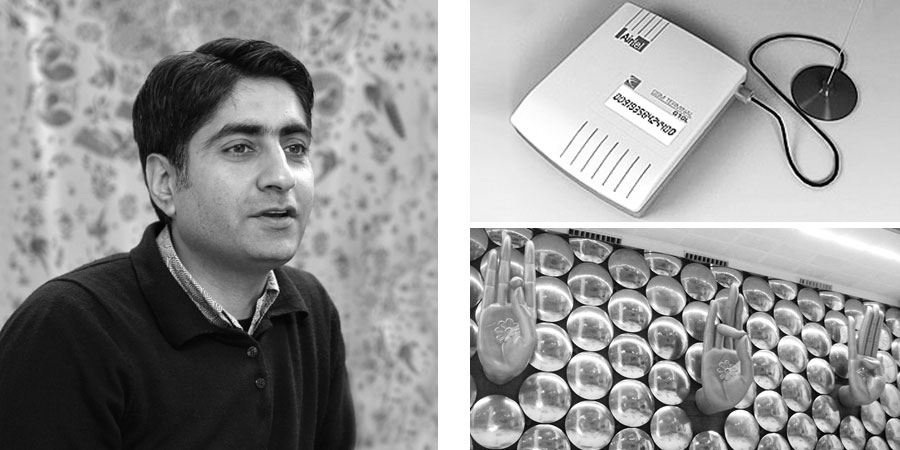
Industrial designer, entrepreneur and design educator Amit Krishn Gulati’s repertoire stretches across new product development, healthcare, hotels, branding, retail experiences and spaces. He graduated from the National Institute of Design, Ahmedabad in 1995 and founded Incubis, an architecture and design studio.
The first speaker at our December forum, Amit presented his work in the healthcare sector for the neonatal care products his studio Incubis has done in collaboration with GE. One of the primary reasons for the studio to take up this project was the raw statistics of this sector. Amit had always wanted to work in this sector but it was a long wait due to a lack of experience in this domain.
At the grass root level, the execution of healthcare sector is shocking in India. Despite the fact we are progressing as a nation on one side, we are lagging behind in this space. Due to better opportunities abroad, many doctors are leaving the country. The ratio of doctors available for number of people, specially in rural areas, is drastically low. It is a sad truth that the infant mortality rate of our country is far worse than some of the African countries. During their project Amit’s team travelled to some hospitals outside Delhi where they found the condition of the health care facilities distressing. Even basic infrastructure was lacking. One reason a big MNC like GE would be keen to take up a project of this nature, irrespective of no major profits, is because they could be positioned as a company ‘who cares’. This would help establish credibility with the government when selling their other products.
In big cities nowadays, child birth is celebrated like a mega event, with the availability of world class equipment costing lakhs of rupees. However in the rural areas this is not the case for the newborn. To come up with a low cost yet high value product Amit and his team did research on the existing products which keep the baby warm (like an incubator). They also looked at other challenges at hand. Their target was to make the product one third of the price of the existing product. The final product took a year to complete and was entirely designed and manufactured in India except for a few technical features.
The other product was for neonatal respiration which helps the newborn baby breathe easily. Amit also spoke about their projects for Samsung washing machines, which was especially thought-provoking as it took into consideration the behavioral aspects of housewives.
Listening to his talk, it was a bit of a letdown to learn that the Indian healthcare scenario was not looking up. At the same time we could see the positive approach of our Indian designers who are more than willing to work with the Government and public sector. Amit’s work was inspirational in giving hope that design can bring a change in our society.
Written by Ankita Singh
Industrial designer, entrepreneur and design educator Amit Krishn Gulati’s repertoire stretches across new product development, healthcare, hotels, branding, retail experiences and spaces. He graduated from the National Institute of Design, Ahmedabad in 1995 and founded Incubis, an architecture and design studio.
The first speaker at our December forum, Amit presented his work in the healthcare sector for the neonatal care products his studio Incubis has done in collaboration with GE. One of the primary reasons for the studio to take up this project was the raw statistics of this sector. Amit had always wanted to work in this sector but it was a long wait due to a lack of experience in this domain.
At the grass root level, the execution of healthcare sector is shocking in India. Despite the fact we are progressing as a nation on one side, we are lagging behind in this space. Due to better opportunities abroad, many doctors are leaving the country. The ratio of doctors available for number of people, specially in rural areas, is drastically low. It is a sad truth that the infant mortality rate of our country is far worse than some of the African countries. During their project Amit’s team travelled to some hospitals outside Delhi where they found the condition of the health care facilities distressing. Even basic infrastructure was lacking. One reason a big MNC like GE would be keen to take up a project of this nature, irrespective of no major profits, is because they could be positioned as a company ‘who cares’. This would help establish credibility with the government when selling their other products.
In big cities nowadays, child birth is celebrated like a mega event, with the availability of world class equipment costing lakhs of rupees. However in the rural areas this is not the case for the newborn. To come up with a low cost yet high value product Amit and his team did research on the existing products which keep the baby warm (like an incubator). They also looked at other challenges at hand. Their target was to make the product one third of the price of the existing product. The final product took a year to complete and was entirely designed and manufactured in India except for a few technical features.
The other product was for neonatal respiration which helps the newborn baby breathe easily. Amit also spoke about their projects for Samsung washing machines, which was especially thought-provoking as it took into consideration the behavioral aspects of housewives.
Listening to his talk, it was a bit of a letdown to learn that the Indian healthcare scenario was not looking up. At the same time we could see the positive approach of our Indian designers who are more than willing to work with the Government and public sector. Amit’s work was inspirational in giving hope that design can bring a change in our society.
Written by Ankita Singh
ARTIST
Rohit Sharma
ARTIST
Rohit Sharma
ARTIST
Rohit Sharma
ARTIST
Rohit Sharma
ARTIST
Rohit Sharma
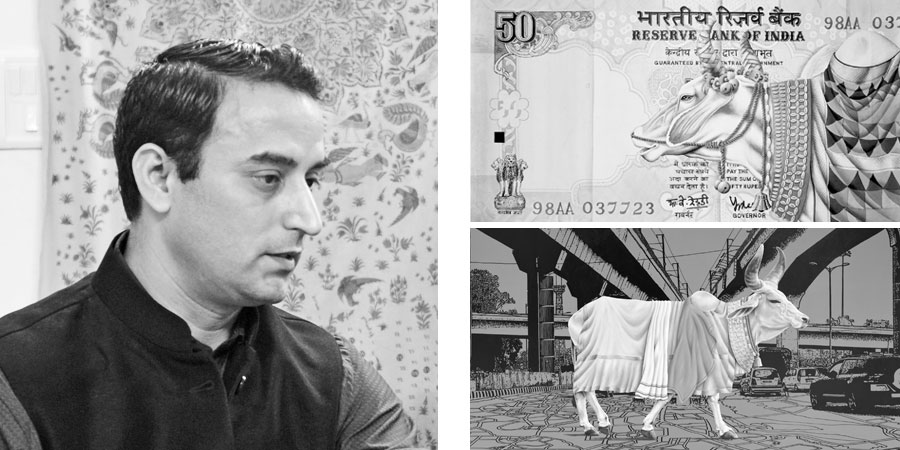
Rohit Sharma’s journey as an artist began when he joined College of Art, New Delhi. He spoke about how he liked observing the day to day life of city dwellers. Rohit strives to capture the nuances of life in a city and Delhi as a city is very diverse. It is an ode to both the ancient and the rapidly growing modern scenario. In his work, Rohit uses elements seen in everyday life to bring out this contrast, which many miss observing.
The cow, a deeply respected animal in India, is one of the essential elements in his paintings as Kamadhenu the Holy Cow. Rohit spoke of how this divine animal, once highly praised for her ability to provide a person with anything he/she wished for, is today considered a nuisance for city dwellers. In his paintings of Kamadhenu, there is always a sense of uncertainty he tries to bring out; almost as if to show that Kamadhenu has run out of things to give to people and she is of no use to them anymore. To strengthen this feeling of uncertainty, he paints the background with the labyrinthine roads of Delhi. The changing roads in the backdrop of each painting with the Holy Cow as the main element also brings in the factor of Kamadhenu’s timelessness.
Rohit uses the color red for the background. He explained why he uses the color, which is to show Delhi’s road rage problem. Rohit has also created art pieces with auto rickshaws. In these pieces, he has brought out the painful effort that goes into traveling around in the city, both for the rickshaw driver as well as the passenger.
Written by Agnisesh Setlur
Rohit Sharma’s journey as an artist began when he joined College of Art, New Delhi. He spoke about how he liked observing the day to day life of city dwellers. Rohit strives to capture the nuances of life in a city and Delhi as a city is very diverse. It is an ode to both the ancient and the rapidly growing modern scenario. In his work, Rohit uses elements seen in everyday life to bring out this contrast, which many miss observing.
The cow, a deeply respected animal in India, is one of the essential elements in his paintings as Kamadhenu the Holy Cow. Rohit spoke of how this divine animal, once highly praised for her ability to provide a person with anything he/she wished for, is today considered a nuisance for city dwellers. In his paintings of Kamadhenu, there is always a sense of uncertainty he tries to bring out; almost as if to show that Kamadhenu has run out of things to give to people and she is of no use to them anymore. To strengthen this feeling of uncertainty, he paints the background with the labyrinthine roads of Delhi. The changing roads in the backdrop of each painting with the Holy Cow as the main element also brings in the factor of Kamadhenu’s timelessness.
Rohit uses the color red for the background. He explained why he uses the color, which is to show Delhi’s road rage problem. Rohit has also created art pieces with auto rickshaws. In these pieces, he has brought out the painful effort that goes into traveling around in the city, both for the rickshaw driver as well as the passenger.
Written by Agnisesh Setlur
ARTIST
Sudip Roy
ARTIST
Sudip Roy
ARTIST
Sudip Roy
ARTIST
Sudip Roy
ARTIST
Sudip Roy
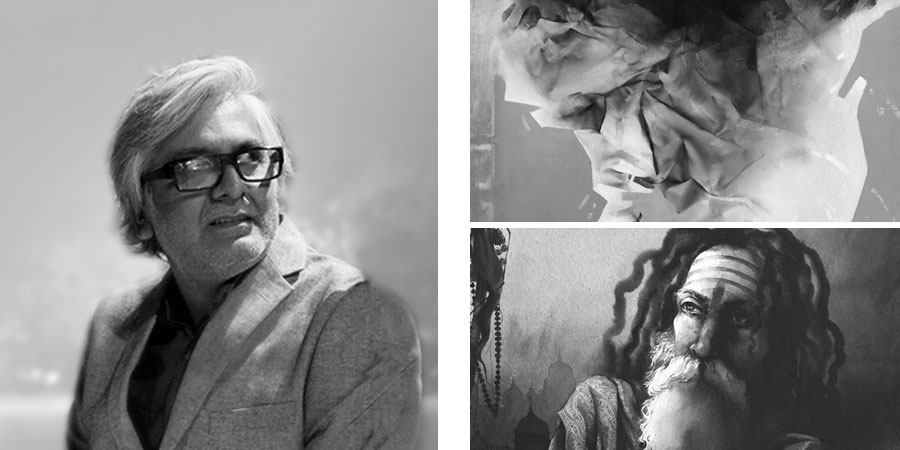
Artist Sudip Roy was born in 1960 in Baharampur in West Bengal. He concluded his studies at the Government College of Art & Craft, Kolkata in 1983. His genre of work includes charcoals, pencil sketches, watercolors and especially wash paintings for which he is best known. His work involves great deal of labor and time.
Roy says that for him the completion time of a painting determines the title of that painting. Abstraction as a process and a projection through contemplation builds inside Sudip and that perchance gives his works another complexion. When Roy moved to Delhi in the mid 90’s, his subjects of study were mainly architectural such as monuments as also still life, figurative work, portraits and body postures, which have been a focus for most part of his life. He forged his own style of modern painting for which he is acclaimed.
Roy had his first solo show at Delhi in 1996 at Art Today, which made headlines in media – his work was sold out within a few hours of the exhibition. Some of his noted shows include exhibitions at Academy of Fine Arts, Kolkata in 1986, Jehangir Art Gallery, Mumbai in 2004, Kalakriti Art Gallery & Artworld at Chennai and Hyderabad in 2016. Select works that are well-known are displayed at the Museum of Sacred Art, Belgium, Birla Academy of Art and Culture, Kolkata, Indian Embassy, USA, Delhi Art College, Indian Parliament and Kerala Museum, Kochi.
Written by Tushar Singh
ASSOCIATE PROFESSOR • JNU
Dr. Kaushik Bhaumik
ASSOCIATE PROFESSOR • JNU
Dr. Kaushik Bhaumik
ASSOCIATE PROFESSOR • JNU
Dr. Kaushik Bhaumik
ASSOCIATE PROFESSOR • JNU
Dr. Kaushik Bhaumik
ASSOCIATE PROFESSOR • JNU
Dr. Kaushik Bhaumik
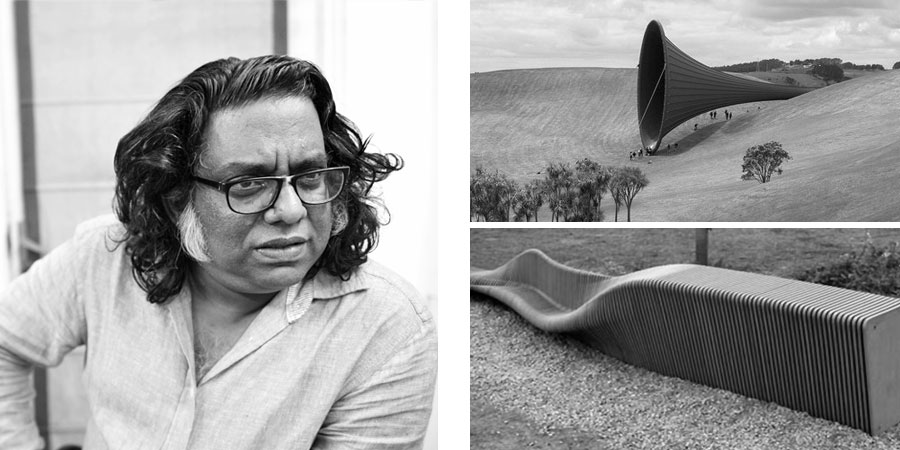
Kaushik Bhowmik is a professor of cinema studies at JNU. He brought an invogarating perspective of Asian cinema through his in-depth presentation connnecting its through movements such as Land Art and the concepts of Zen & Bonsai. Kaushik spoke in great detail of what the land art movement was about, and how this influenced cinema.
Citing popular examples like Robert Smithson’s Spiral Jetty, he spoke about what qualified as land art and how this was literally a break away from the age of industrialisation. He also spoke about Bonsai as an art form and other Zen practices lending to thoughts & styles behind a lot of Asian cinema. Kaushik argument showed us the viewpoints of how these movements helped bring art & cinema closer to ecology in a sense. Understanding all these theories was more than a glimpse, letting us enter the fascinating landscape of Asian cinema, exposing us to many new concepts and schools of thought.
Written by Anshul Kapoor
FOUNDER • POTLI
Pooja Ratnakar
FOUNDER • POTLI
Pooja Ratnakar
FOUNDER • POTLI
Pooja Ratnakar
FOUNDER • POTLI
Pooja Ratnakar
FOUNDER • POTLI
Pooja Ratnakar
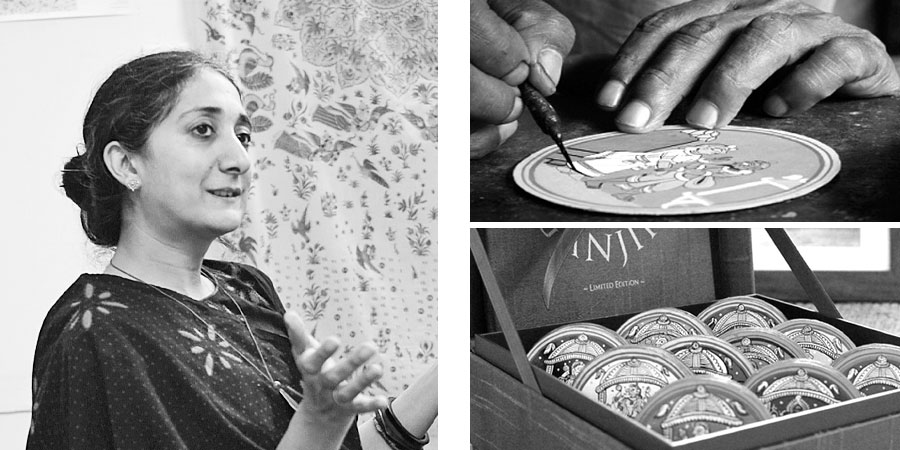
Pooja Ratnakar was the fifth presenter of the December Lopez Design forum. If you ask Pooja what she does, she likes to describe herself as an avid traveller, painter and writer. A NIFT alumnus, the traditional art and craft forms of India are very close to her heart. Pooja is an avid advocate for creating awareness and preserving these ancient practices. This passion of hers evolved into ‘Potli’ – where she develops DIY kits for kids, based on Indian folk art forms like Patua, Madhubani, Santhal and Gond. Their vision is to educate people about these dying arts and crafts, expand markets for the artisan communities and help sustain the ancient arts.
Pooja’s cultural roots are very strong and this journey began with her sister many years ago when they started working towards creating livelihoods for the rural artisan community, specially in Orissa and West Bengal. A passionate explorer, she would spend even her holidays living with communities and understanding their culture. The first time they visited Orissa, the sisters were in a village where the locals barely understood Hindi. They wanted to work with the local women and their idea was to use their skill set in creating small hand bags. With this endeavor in mind, they gave materials to the local people to work with and the women started making bags. When the end products were ready, the duo realized the bags had been produced in varied sizes. From such early experiences, Pooja started to learn the kind of knowledge building required to bring crafts into the present-day context.
At Potli they explore cultural identities through arts and crafts to enable children to understand the visual language of a culture. As children today are not exposed to different cultures they are unaware of many nuances. The aim of Potli is to introduce children to their cultural roots as well as the collective identity. Through young minds, they attempt to close the gap between the assumed identity and the real identity. The products they create are fun and interactive for the children. To create such interesting and beautiful products, a clear process is followed. It starts with identifying the artisans who live in mostly backward rural areas. The team work with them and make them a part of the project. The artists have a fair share of the profits from the products that are sold.
In the process of research the team at Potli came across the ganjifa cards, which is a card game consisting of playing cards that are most associated with Persia and India. The art of playing these ancient cards is still alive in parts of Orissa, Andhra Pradesh, Karnataka, Maharashtra and Rajasthan. Fascinated by their find, they spent six years of research to finally give shape to the product. We enjoyed going through these colorful products of Potli, many of which are DIY kits for children. It was rewarding to find out how Pooja is helping our society revive its past through Potli.
Written by Ankita Singh
FOUNDER • BEEJA
Meghna Ajit
FOUNDER • BEEJA
Meghna Ajit
FOUNDER • BEEJA
Meghna Ajit
FOUNDER • BEEJA
Meghna Ajit
FOUNDER • BEEJA
Meghna Ajit
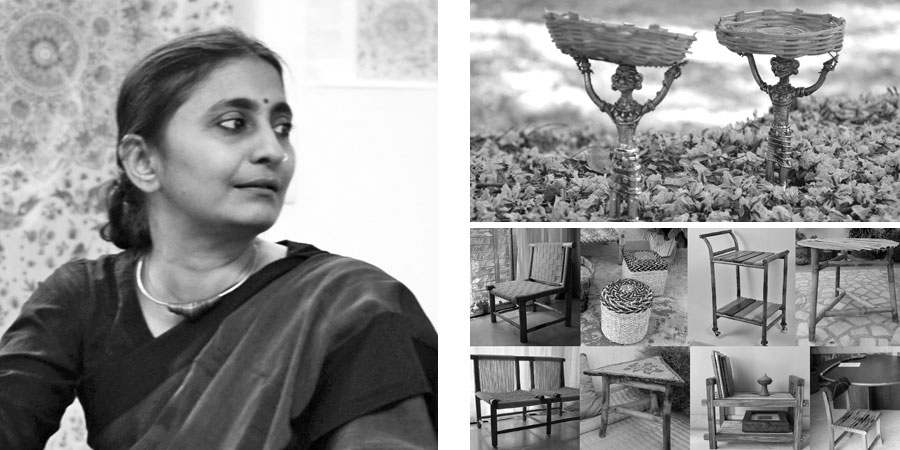
Meghna Ajit, a furniture design graduate from NID (2000) is a social entrepreneur who works to reinvigorate crafts for livelihoods. At the Forum, she spoke about her initiative, ‘Beeja’, which kick-started with a year and half long project in 2004 supported by UNDP – SGP, under her studio – UCMA design studio, now renamed as ‘Project Beeja.’ The project offered a huge learning about working with communities and systems operations at the grassroots level. As part of this project, bamboo and local fibre was developed and promoted as an alternative support system for existing livelihoods in two identified regions – one in the hilly terrain of Ranipokhri and the other in fertile lands of Pilkhua. This demonstrated how local species of bamboo can be used effectively across varied terrain, as an environment-friendly practice and material.
The core team, Utkarsh Chandola, Meghna Ajit and Joginder Deb Burman at UCMA design studio faced several challenges, including cultivating bamboo in a dry river bed, protecting small saplings from elephants, rabbits and cows. They had to convince farmers who were resistant to growing bamboo, worried it would destroy their other crops. Of the 1 lakh 50 thousand bamboo saplings that were planted over two years, only few were saved. Nevertheless, the project demonstrated huge potential and culminated in an extensive community development exercise. Beeja took this ahead as a self-supported and self-funded initiative from 2007 onwards.
Continuing with the project intent, in 2007, at Pilkhua, a handloom hub, Meghna formed a group with support from Arshad Kafeel (National Awardee in block carving) and his family. Much time, effort and resources were invested to integrate the existing craft with other materials and techniques. In place of inlay work, the team from Beeja brought in different methods of colour staining wood and introduced cheaper woods like rubber, mango and chirpine to address mass production needs of the market. Wood carving patterns were developed alongside. To promote the local authenticity of the region and to bring back value to block carving, they studied the history of block carving in Pilkhua, identified motifs and integrated cultural stories for their craft. An extensive product range emerged, which was marketed through multiple retail chains and curated shops across the country. It was an important exercise to revitalize craft for the mainstream market and not let it remain exclusive for limited customers. This group stayed in focus till 2012-13. These product ranges are now being successfully marketed by the block carver families of the region, managing large orders with a new direction.
Simultaneously, the team was developing and shaping other livelihood groups. Eventually, Beeja identified and groomed nine groups of existing crafts and indigenous skills around the Pilkhua region: Block Carving, Block Printing, Needle Work, Handloom Revival, Henna – Cone craft, Natural Dye, Rope Making, Papier mache and Bamboo work. Meghna’s dream was to set up a model project in bamboo that could be replicated across the country. Persisting, she engaged with the community, knocking on every door. Eventually, they identified a ‘Bamboo group’ within the community, which was trained to make furniture in bamboo keeping in mind their skills, understanding and other local abilities.
Papier mache group and craft, an all-woman unit, is a subtle and unique achievement for Beeja. The integration of papier mache with cone craft, emerged with a unique identity over the years, called ‘Beeja Art’ in local bazaars. Co-working thus brought in an interesting character by the combination of crafts and materials with the languages of crafts flowing into one another. There is a new energy and hope with groomed young artisans. Renewed efforts are on to make these groups self-sustainable. With this, Project Beeja entered the sphere of “craft entrepreneur training”, training youth and making them responsible for marketing and production. Entrepreneurs are directly linked to the market, where they sell their own designs. Beeja also started looking at the overall wellbeing of the community in health and for education.
With realisation that intervention at the primary education level with hands-on experience ensures continuity with previous generations, Beeja is now focussing on developing appropriate education systems in the rural scenario, alongside supporting enterprises that have come up in the community.
Written by Deekshit Sebastian
Activation
Project Management
Supervision
Fabrication & Installation
© 2025 Lopez Design Pvt. Ltd. All rights reserved